
Access control
Dynamic roles, configurable permissions, action-level controls, branch-scoped visibility, and per-user control patterns support enterprise governance.


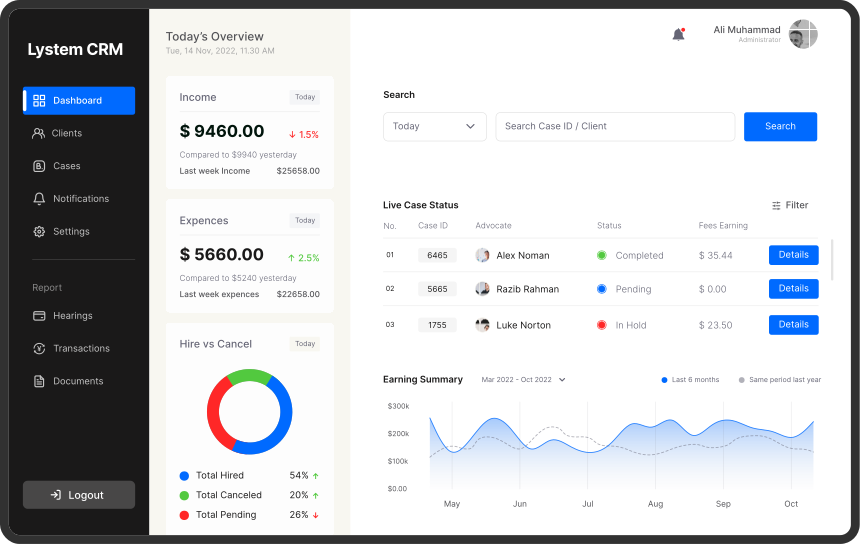
Dynamic roles, configurable permissions, action-level controls, branch-scoped visibility, and per-user control patterns support enterprise governance.

Action logs, login history, active sessions, notification history, and full control over internal workflows improve accountability and traceability.

On-premise AI architecture avoids sending client data to external AI providers and keeps model execution aligned to internal infrastructure.
The mobile scope includes JWT or OAuth 2.0 authentication, API-level RBAC, session expiry, TLS 1.2 or higher, graceful offline handling, and no sensitive data stored on the device. The web scope further strengthens security with secure session management, audit retention, RBAC enforcement across both frontend and backend, and protection against common web vulnerabilities.
Fast app launch, read-only offline cache for recent data, push notifications, and protected mobile API access keep the companion experience secure without becoming heavy.
Secure browser access, multilingual support, notification controls, session logs, action audits, and API-ready architecture support both daily operations and future integrations.
This same privacy-first approach is reflected in the AI proposal, which emphasizes no reliance on external AI services, no internet requirement after installation, suitability for legally sensitive environments, zero ongoing API costs, full audit control, and continuous firm-specific learning over time.

No dependency on public AI APIs for firms that need strict confidentiality.

Once deployed internally, the private AI layer can operate fully within your environment.

Every AI-assisted decision can remain visible, controlled, and accountable inside the firm.